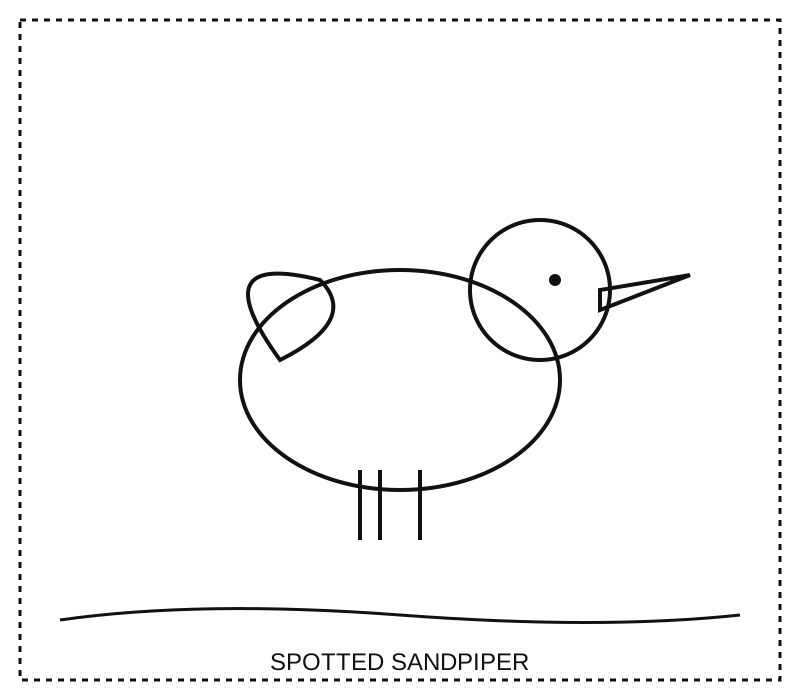
Simple stylized outline, generated uniquely for this species — designed with thick, kid-friendly lines built for crayons and markers.
Spotted Sandpiper Coloring Page
In: Birds
- Common name
- Spotted Sandpiper
- Scientific name
- Actitis macularius
- Family
- Scolopacidae
- Habitat
- North America
- Diet
- Insectivore
The Spotted Sandpiper is one of the more interesting birds in the Nature Doodle library — a real species, not a cartoon, with a real story behind its shape, its colors, and its place in the natural world.
Coloring this page is a great way to get kids talking about more than just appearance. The Spotted Sandpiper is most often found in North America, where its body shape, color, and behavior are tuned to the specific demands of that environment. It is a Insectivore, meaning where it travels and when it is active are shaped largely by its search for food. Look closely at the outline before reaching for crayons. Where on the body is the heaviest line work? What features stand out? What might this bird look like in motion?
Female spotted sandpipers mate with multiple males who incubate her eggs. A small, surprising fact like this is one of the easiest ways to make a coloring page sticky. Read it aloud while the kids are coloring and watch how often it gets repeated at dinner that night.
Print this page on standard letter or A4 paper, hand it out alongside a small set of crayons or colored pencils, and let kids decide whether to color the Spotted Sandpiper realistically or invent their own version. Both approaches teach something different — realistic coloring trains observation, invented coloring builds creative confidence.
If your kids enjoy this page, browse the rest of the bird collection for more closely related species, or jump to one of the ecosystem packs to see the Spotted Sandpiper alongside the other plants and animals it shares its habitat with.
How to use this page
Print at letter size on standard 8.5×11" paper. The outline is designed with thick, kid-friendly lines that work with crayons, colored pencils, and washable markers. For classroom use, print one copy per student and keep a colored reference image nearby so kids can match real-life colors — or encourage creative interpretations of habitat and pattern.
Extension activities
Pair this page with a short writing prompt: ask kids to describe where this spotted sandpiper lives, what it eats, and one thing it can do that humans can't. For older students, use the scientific name as a launch point to explore the broader family and how related species share traits.